Beginner's Guide 1: Caring for Tarantulas

Table of Contents

Tarantulas make excellent pets for people who enjoy observing rather than constantly interacting. They require far less daily attention than most reptiles or mammals, yet they live for many years and display intriguing behaviors like burrowing, web-building, and the dramatic process of molting. Success comes from matching the species to your experience level and providing stable, species-appropriate conditions from day one.
Choosing Your First Tarantula
Start with a New World terrestrial species from the Americas. In my experience, these tarantulas defend themselves primarily by kicking urticating hairs from their abdomen rather than relying on speed and more potent venom like many Old World species from Africa and Asia. The hairs cause irritation but are far more manageable for beginners than the intense pain and systemic effects possible from Old World bites.
Two of the most reliable beginner species are Grammostola rosea and Brachypelma hamorii. There are many more beginner-friendly species, but that will be the subject of another Guide!
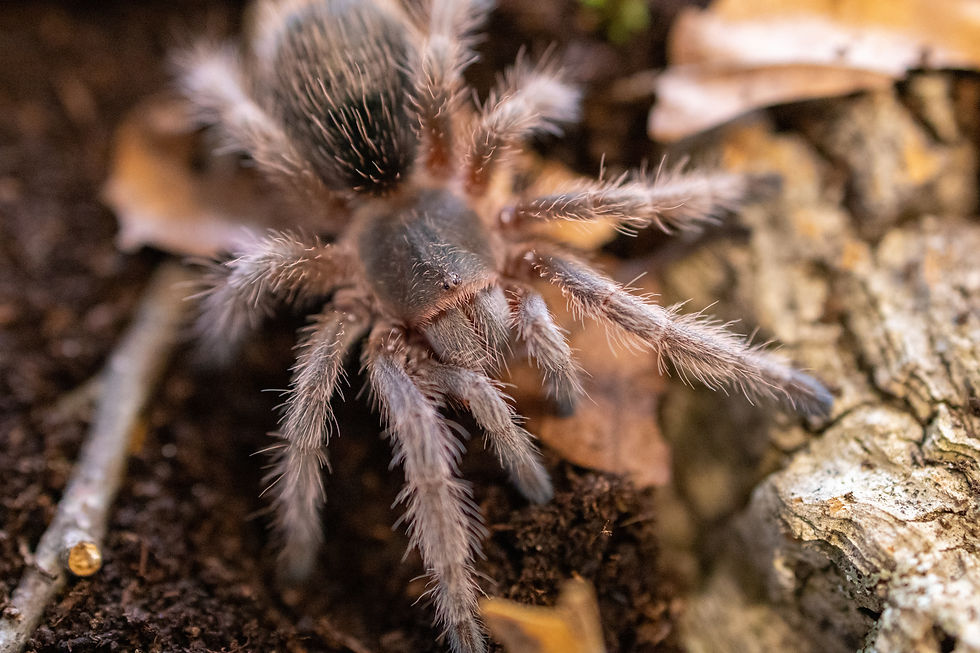
Grammostola rosea comes from semi-arid scrublands and grasslands in Chile and neighboring regions. Adults reach roughly 5-6 inches in leg span. They are slow-moving, generally calm, and famously hardy. Extended fasting is normal for this species and not a cause for panic when the spider otherwise looks healthy.
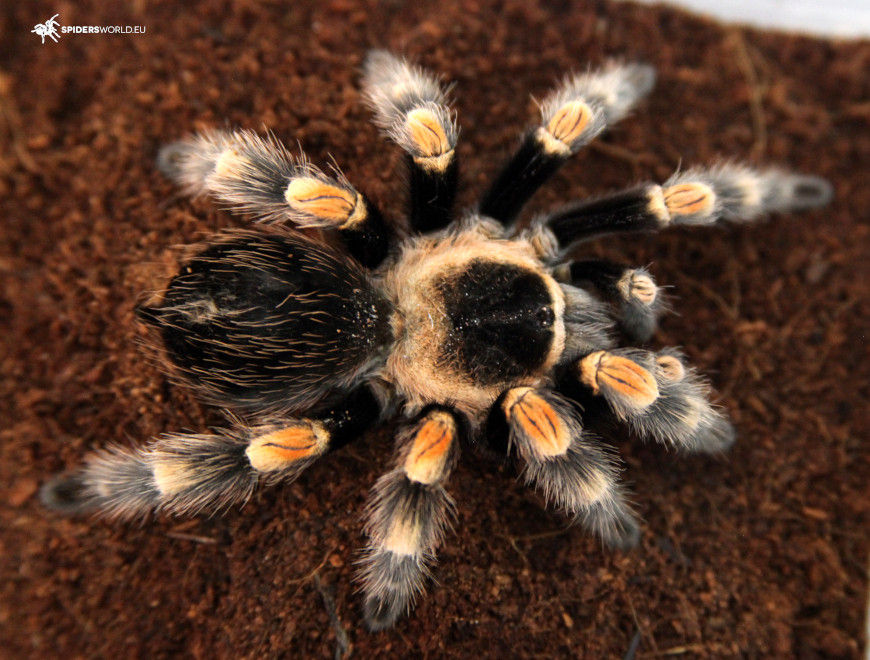
Brachypelma hamorii comes from drier savannas and scrublands in Mexico. Adults reach about six inches in leg span and display black coloration accented with bright orange markings on the leg segments. These tarantulas are known for their calm and docile temperament, although they can be slightly more skittish than Grammostola rosea, and often choose to retreat into their burrow rather than display defensive behavior when disturbed.
Both species possess urticating hairs but are widely regarded as forgiving for new keepers.
I recommend starting with a juvenile or adult rather than a sling, as slings tend to be more challenging for beginners and require more specialized care.
Note: Buy captive-bred specimens from reputable breeders. This supports conservation, reduces the chance of parasites or stress-related issues common in wild-caught animals, and is especially important for species that are threatened or overcollected in the wild.
Housing Setup
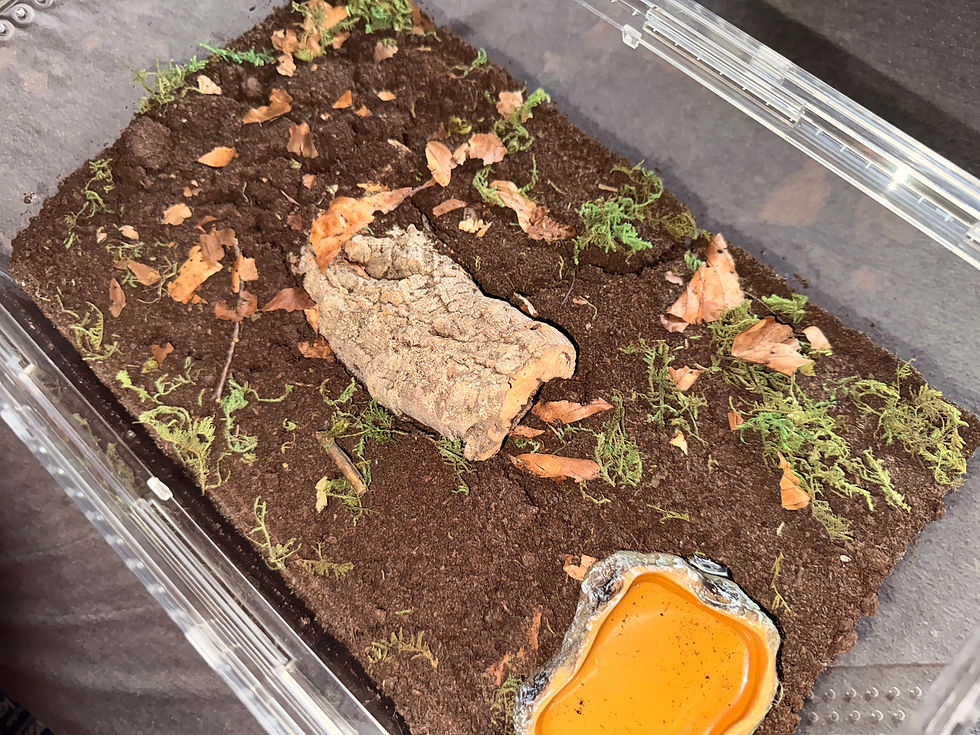
Tarantulas are escape artists and surprisingly strong climbers. The enclosure must have a secure, tight-fitting lid with ventilation that the spider cannot squeeze through. A practical guideline used across experienced keepers is to provide floor space roughly three times the tarantula’s leg span in length and about twice that in width. Height should allow some natural movement but remain low enough that a fall from the lid is unlikely to cause fatal abdominal injury.
For an adult of either recommended species, a dedicated invertebrate enclosure or a suitably sized plastic tub or glass tank works well. Fill it halfway to two-thirds with substrate. This depth supports burrowing and cushions against any accidental drops. I use special terrarium soil for nearly all of my tarantulas. For species that are heavy burrowers, I add some clay to the substrate to give it more structure.
Feel free to experiment with different soils, coconut fiber, clay, and anything else you can find that’s non-toxic and suitable for your tarantula species!
Results can vary depending on where you live, as humidity and temperature differ around the world and affect how the substrate behaves.
Add a secure hide: a half-round of cork bark or a reptile cave works perfectly. Place a shallow water dish in the enclosure. Cross ventilation on the sides helps maintain airflow and prevents stagnant conditions that lead to mold. Certain species, such as Avicularia spp., are highly sensitive to poor air circulation and can even die as a result. Feel free to add any extra decorations you want. It doesn’t really matter whether you use natural or artificial items, as long as they are free of pesticides and other harmful substances and don’t have any sharp edges that could damage the spider’s abdomen, which is almost always fatal.
Temperature and Humidity
These conditions depend heavily on the species, so let’s look at our Grammostola rosea and Brachypelma hamorii as examples.
Most tarantulas thrive at normal room temperatures between 20-25 °C (68-78 °F). You usually don’t need extra heat unless your room regularly stays below that range. If you really need a heat mat, never place it on the bottom of the enclosure. Tarantulas instinctively dig down when they get too hot, which can cause them to overheat and die.
Humidity requirements for our G. rosea and B. Hamorii are moderate. A full shallow water dish provides hydration and evaporation. For spiderlings, lightly moisten one corner of the substrate occasionally and allow it to dry between waterings. Good ventilation is more important than chasing exact percentages on a hygrometer. Excess moisture is far more dangerous than slight dryness for these hardy species.
Early in my own keeping, I over-misted in an effort to be thorough. Minor mold appeared until I switched to relying primarily on the water dish and proper airflow. The spiders did better, and maintenance became simpler. Tarantula care is usually very simple compared to most other pets. Don’t make it harder than it needs to be. Most of the time you end up doing more harm than good by overcomplicating things.
Feeding

Tarantulas eat live insects. Dubia roaches and crickets form an excellent staple. Mealworms and superworms can be offered occasionally as part of variety but should not be the only prey because of lower nutritional value. Remove any uneaten insects within 24 hours. A live cricket can injure or kill a spider that is molting.
Feeding frequency varies widely depending on the spider’s age and condition:
Spiderlings and small juveniles: every 3–7 days
Larger juveniles: roughly once a week
Adults: every 1–3 weeks, guided by abdomen appearance
A healthy abdomen is typically about 1.5 times the size of the carapace, which is the "head" of the spider. It doesn’t mean your spider is in danger if the abdomen is a bit larger or smaller, but a very large abdomen can increase the risk of injury, while a noticeably small one usually just means it’s time to feed again. Above all: Stay calm!
Water
Provide a shallow water dish at all times and clean it regularly to prevent bacterial buildup. Tarantulas often drink from standing water. Some individuals also absorb moisture from lightly damp substrate areas.
Molting

Molting is the process by which tarantulas grow and replace their exoskeleton. It is the most vulnerable period in their lives. Approaching molts are usually signaled by refusal of food, increased hiding, a darkening or shiny abdomen, and sometimes the construction of a silk mat.
When you notice these signs, leave the spider alone. Do not feed, mist near it, or perform any maintenance that disturbs its hide. The tarantula often lies on its back during the actual molt, which can last from minutes to many hours.
After molting, the new exoskeleton is soft. The fangs require several days to over a week to harden fully (they turn solid black). Wait until the spider is active again before offering food. I recommend waiting at least 7 days before trying to feed your tarantula after a molt. Disturbing a tarantula during or immediately after molting can cause serious injury or death.
Handling and Personal Safety

Tarantulas are best kept as display animals. Handling provides no benefit to them and carries risks of stress or injury from falls. If you still choose to handle your tarantula, always stay close to the ground so the spider won’t be injured if it falls. I’ll cover handling in more detail in a separate post.
Most New World species possess urticating hairs: tiny barbed setae that they can flick from their abdomen if they feel threatened. These hairs penetrate skin and cause mechanical irritation plus an inflammatory response. Most people experience itching, redness, or a rash that lasts from hours to a couple of days. Sensitivity can increase with repeated exposure. If hairs enter the eyes, seek medical attention. Severe cases can lead to blindness.
Bites from recommended beginner species are uncommon unless the tarantula is severely stressed. If they occur, the venom is not medically significant for healthy people and typically produces pain comparable to a wasp sting that subsides within hours. Individual reactions vary.
Old World species lack urticating hairs but have more potent venom, which can cause much more severe effects such as intense pain, sweating, flu-like symptoms, cramps, and more. They are not suitable as beginner tarantulas.
Conclusion

Tarantulas reward keepers who approach them with patience and a willingness to observe rather than constantly intervene. The species covered in this guide are among the most forgiving options available, but they still require consistent basic care and respect for their natural behaviors.
Most problems that arise in the first years of keeping stem from choosing the wrong species, disturbing the spider during molting, or overcomplicating their care.
Start simple. Provide a secure home with the right depth of substrate, a reliable water source, and appropriate live prey. Learn to read your tarantula’s condition by watching its abdomen and behavior rather than following rigid schedules. Over time you will develop an understanding of what normal looks like for your particular spider. With steady conditions and minimal interference, these animals can live for many years and offer a quiet, fascinating window into the.. Realm of Spiders.. sorry.
Take your time, research the specific needs of the species you choose, and enjoy the process.
Comments